
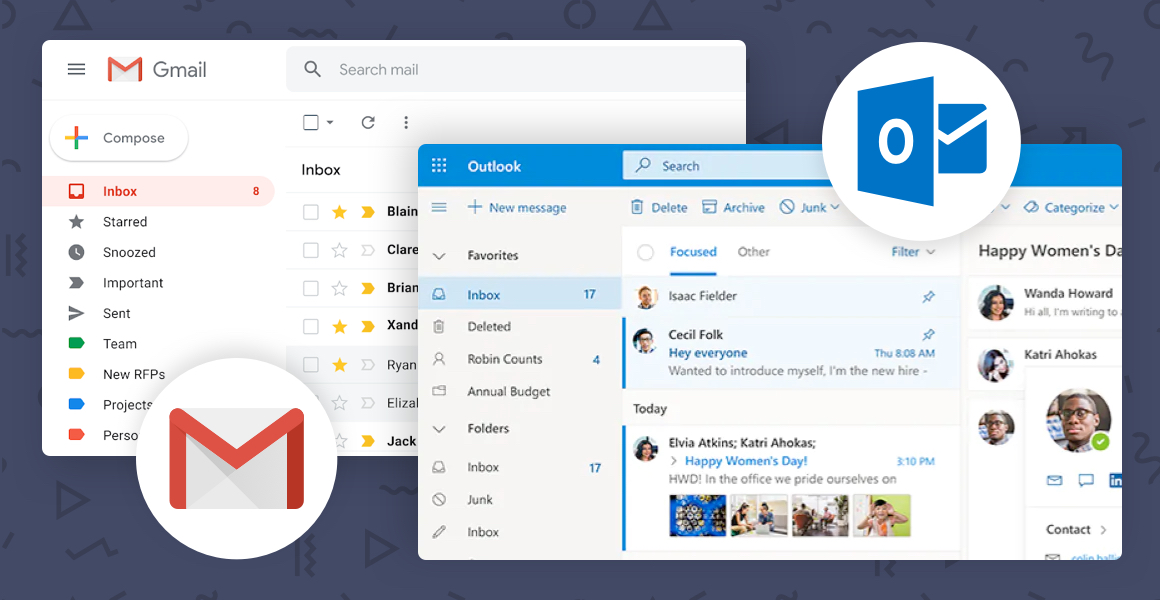
In today’s interconnected digital workspace, ensuring seamless integration between email services like Gmail and email clients such as Microsoft Outlook is crucial. However, users often encounter hurdles in maintaining this connection, particularly with Gmail not functioning within Outlook. This article delves into the common issues and solutions, providing a step-by-step guide to overcoming these challenges.
Understanding the Root of the Problem
At the core of Gmail and Outlook integration issues is the need for correct IMAP settings within Gmail. IMAP must be activated for Outlook to retrieve your emails. This process involves navigating to Gmail’s settings, accessing the Forwarding and POP/IMAP tab, and enabling IMAP. Following this, ensuring that your email client possesses the accurate SMTP and other necessary settings is paramount. The table below highlights the essential settings for a smooth integration:
| Setting Type | Value |
|---|---|
| Incoming mail (IMAP) | imap.gmail.com |
| Outgoing mail (SMTP) | smtp.gmail.com |
| Full name or display name | Your name |
| Account name or username | Your full email address |
| Password | Your Gmail password |
Steps to Resolve
- Enable IMAP in Gmail: This is your first step toward resolving the connectivity issue. Without IMAP enabled, Outlook cannot access your Gmail messages.
- Adjust SMTP and Other Settings: Verify your email client’s settings against Gmail’s requirements. Incorrect settings can prevent successful email syncing.
- Authorize Outlook in Gmail: Ensure that Gmail permits Outlook to access your emails. This may require adjusting security settings or temporarily disabling two-factor authentication.
- Refresh Your Email Client: After implementing the above steps, refresh Outlook or your chosen email client to synchronize your Gmail account anew.
Real-World User Experiences
Users have shared varied experiences in attempting to resolve Gmail connectivity issues with Outlook. Common steps include enabling IMAP, adjusting email client settings, and ensuring Gmail’s permission for Outlook access. Some have found success through more drastic measures like system restores or by consulting specific Microsoft support articles tailored to these issues.
Wrapping It Up: Seamless Email Integration
Achieving flawless integration between Gmail and Outlook requires attention to detail and patience. By following the outlined steps and adjusting settings as needed, users can overcome the common obstacles that hinder email syncing. Remember, the key lies in ensuring IMAP is enabled in Gmail and that your email client’s settings are correctly configured to match Gmail’s requirements.
Frequently Asked Questions
- What is IMAP and why is it important for Gmail and Outlook integration?
IMAP stands for Internet Message Access Protocol. It’s crucial for syncing emails between Gmail and Outlook because it allows Outlook to access and manage your Gmail messages directly from the server. - How can I check if IMAP is enabled in my Gmail account?
Log into Gmail, navigate to Settings > See all settings > Forwarding and POP/IMAP tab, and verify if IMAP is enabled. - What should I do if adjusting the IMAP and SMTP settings doesn’t resolve the issue?
Consider checking Gmail’s permission for Outlook access, ensuring security settings like two-factor authentication aren’t blocking the connection. - How long does it take for changes to take effect and emails to sync after adjusting settings?
Changes typically take effect immediately, but syncing might require up to 15 minutes to refresh fully. - Can these connectivity issues affect both Windows and Mac users?
Yes, these issues can affect users across both operating systems, though the steps to resolve them remain consistent.